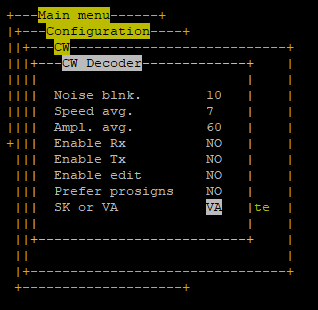
How do you finish a CW QSO? I always thought the standard procedure was to pronounce your key going silent with <SK>. It was only recently whilst digging through my new QMX’s settings that an odd option piqued my interest. Is there more to ● ● ● ━ ● ━ than meets the ear?
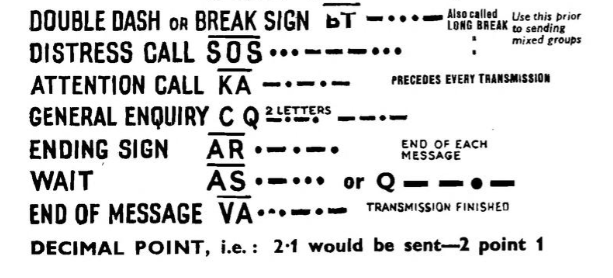
It seems that there’s a bit of an Atlantic divide in the origins of <VA> and <SK>, with the former being European and the latter American. In the end though, it’s worth noting that the signal predates the letter concatenations, so there really is no right or wrong. It’s the same as <SOS>, where the commonly used mnemonic “Save Our Souls” was only later adopted.

So when did they start being used?
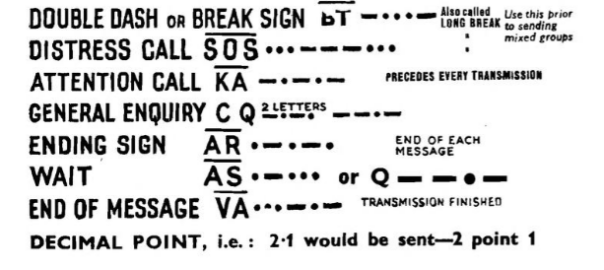
The earliest use of <VA> I could find was a training course booklet offered by an RAFVR officer published in 1941.
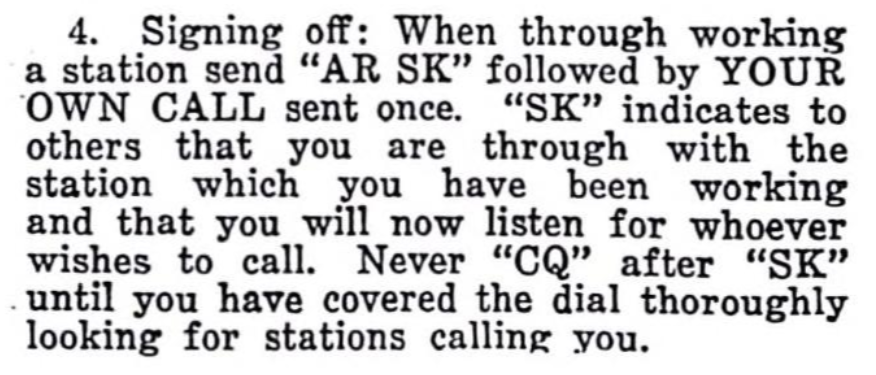
The earliest use of <SK> on the other hand was The Radio Amateur’s Handbook from 1926. Interestingly though, in the 1955 edition of the ARRL’s “Learning The Radiotelegraph Code”, they didn’t refer to pronouns at all, rather referring to the signal simply as “didididahdidah“.
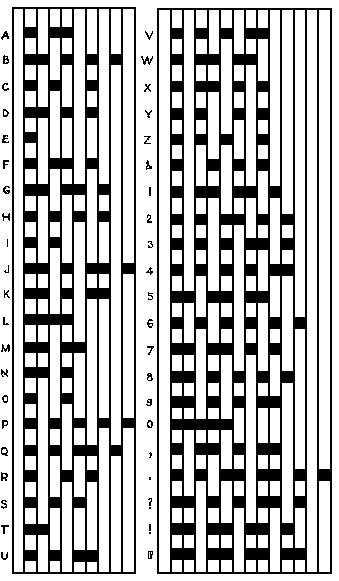
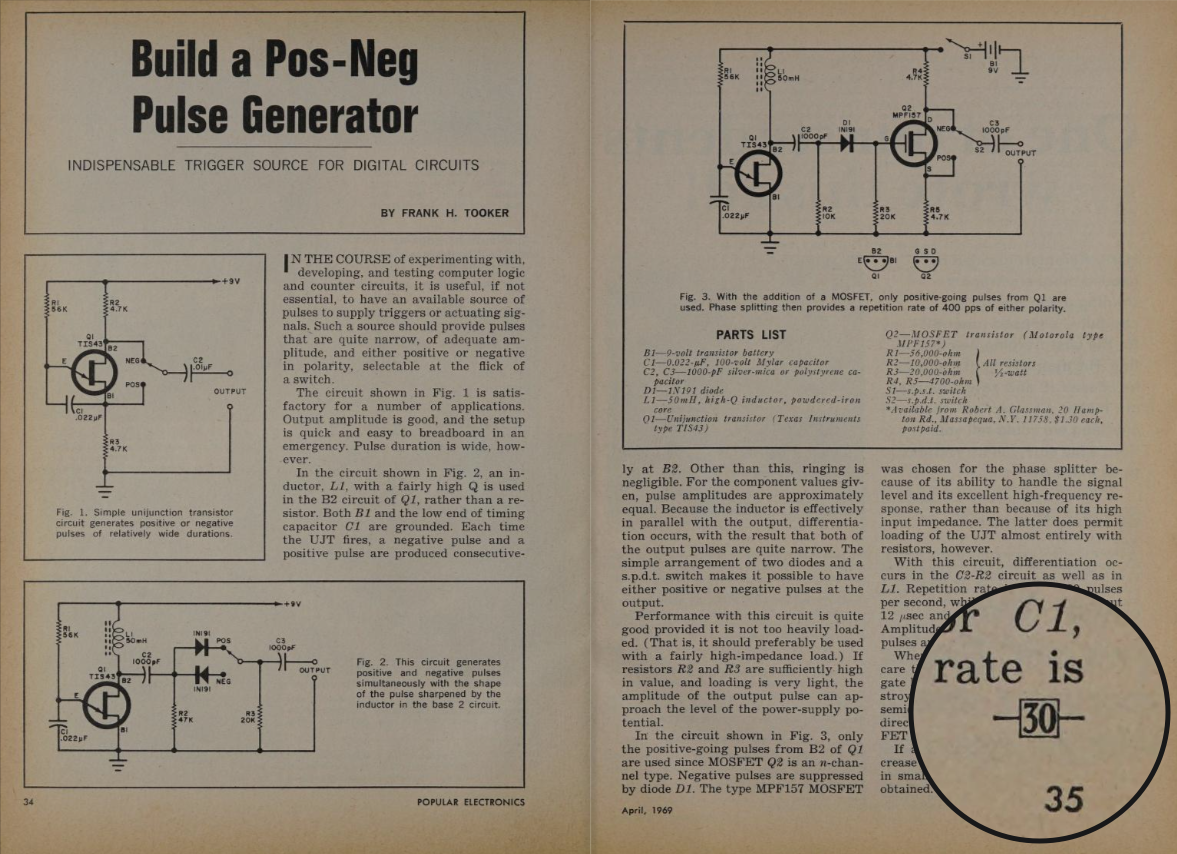
What about <30> then, as it doesn’t even sound the same? Well we need to travel back to 1859, when the world was still black and white, and the Western Union Telegraph Company standardised their morse code system with the publication of their “92 Code”. In it, “Finish” was coded as 30.
By examining the American Morse chart, we can see that it looks remarkably familiar.
● ● ● ━ ● ━━━
Here’s an anecdote from info from Dave, VE7AHT:
To add to the folklore regarding VA/SK meanings, when I started my career in 1960 with what was then Canadian Pacific Telegraphs, News Bulletins were still being relayed across the system by teams of Telegraphers. I was hired as a T&R technician and Railway Morse was the common mode of communication among technical staff maintaining the open wire line and associated carrier equipment. Part of our duties occasionally included off hour handling of commercial telegraph traffic including news bulletins (BN’s) These bulletins were always ended with the prosign<30>. Railway morse code for the number 3 is …-. and the number 0 is a LONG dash. Sent as a prosign, it is …-.- which is indestinguishable from the prosign <SK> save for the slightly longer timing of the final dash. I have often mused that like so many expressions inhereted from earlier times, when railway Telegraphers transfered to jobs requiring international code, <30> was easily commuted to <SK>with the same meaning.
Just my personal observations and unsupported conclusions. (At my age, I am entitled to such conclusions! Hi Hi)
P.S. For those who might care, newspaper Type Setters parsed newsbulletins into boiler plates scattered around the daily news paper, with -30- at the end of the article to let the reader and publisher know that was the end of the message (text)
73 VK7TO <IETA> (In Ebbing Tide, Adieu)
Lance
March 2026
Interesting history, procedure, and QMX linkage! Tnx for taking the time to share it.